


2026 THRIVE | Inclusive Economies
Greetings neighbors,
“It’s our economy, not the economy.” A few years ago, I heard USC professor Manuel Pastor say these words, and something shifted for me. Communities have more agency than we give ourselves credit for. Thinking of Whatcom County’s economy as “ours,” reminds and invites the people who live here — “us” — to shape it in ways that work for the whole community. Below, you’ll find some of the practical steps the Community Foundation is taking toward building a local economy that includes and benefits everyone, and how you can join the effort.

Mauri Ingram,
President & CEO
COMMUNITY OPPORTUNITY: Building Shared Prosperity
Not everyone in Whatcom County has access to the three gamechangers needed to build, maintain and pass on wealth: a vision, a path and the resources to follow them.
When we leave our neighbors out, we cause harm. It’s that simple. There is also added cost to the whole community. In fact, Whatcom’s long-term prosperity depends on ensuring everyone has opportunities to make a living that affords them a life.
Broad-based economic mobility requires opportunities for all to improve their economic security and create a nest egg. Inclusive economies are designed for everyone. They are characterized by resilience and stability with success measures that include markers for community health and wellbeing, not just GDP.
Yet 40-50% of the U.S. population faces barriers to full economic participation.This is both a moral crisis and a practical one. Everyone deserves to thrive. As someone who thinks in terms of work to be done and ways to bring value to the community, I’m embarrassed to say I sometimes need to remind myself of the most important value we hold: people are precious. Every single one of us matters simply by virtue of being. Full stop. In addition, everyone, no matter their proximity to opportunity, has much to contribute — knowledge, skills, experience, ideas and labor. Why would we leave any of those on the sidelines of our local economy?
“People with low incomes are not “needy,” says Prosperity Now founder Bob Friedman. They are needed. They are “a source of common genius…we deny ourselves the benefit of that common genius when we close off the economy to half the population.”
In an inclusive economic system, it’s easy for anyone to bank, save, borrow and invest. Caregiving responsibilities do not prevent desired employment. People can fully participate in economic life by having knowledge of and fair access to everything they need — rules, norms, relationships, education, technology, capital — to start a business, find a job, or engage in commercial or financial markets.
In Whatcom County:
⋅ Nearly 40% of households either live in poverty (12%) or face cost-of-living constraints that make meeting basic survival budgets a struggle (26%).
⋅ While overall home ownership – a significant source of wealth – is at 63%, when the data is broken out by skin color it ranges from 37% to 65%.
⋅ Of more than 6,200 employer firms:
⋅ Women own less than a quarter of them (23.5%) despite representing 51% of the population.
⋅ At 8.8% (and 22% of the population), the Bellingham metro area has the state’s lowest rate of minority business ownership and ranks as one of the worst in the nation for cities its size.
The opportunity is to create widespread financial security and stability for families, local businesses, including fishing and farms, and communities across the county and through generations. There are proven solutions, and many are gaining momentum in cities and regions across the country and beyond.
What we’re doing:
Championing Employee Ownership – one of the most powerful ways for workers, who often would not be considered entrepreneurs, to build wealth and strong businesses while keeping local dollars circulating. The Community Foundation launched the Washington Center for Employee Ownership (WACEO) so that more people in Whatcom County and across the state know employee ownership (EO) is an option and understand its many benefits.
Sponsoring Child Savings Accounts – The data is clear: when a child starts life with even a modest savings account, good things happen, including increased education, financial and emotional security, and improved maternal mental health. The Community Foundation is partnering with organizations like Mercy Housing Northwest and the Ferndale Public Schools Foundation on early launch programs that have opened accounts for more than 270 kids and counting. These efforts are helping inform the universal countywide program we’re working toward, where “start-up” capital meets curriculum to embed the wealth-building identity that is routinely developed in families with more resources.
Offering impact investing – where donors don’t have to choose between making money and making a difference. From microlending to loan guarantees to equity stakes, impact investments generate measurable social and/or environmental benefits alongside a financial return, playing a direct role in achieving a shared vision for the community that includes investing in populations otherwise left out by the financial services sector.
Spearheading Millworks – a community benefit project on Bellingham’s waterfront that weaves an incubator for food-based entrepreneurs, much-needed affordable and workforce housing and childcare together with small business resources, commercial space and open areas designed for gathering. Millworks will also galvanize more investment in waterfront redevelopment.
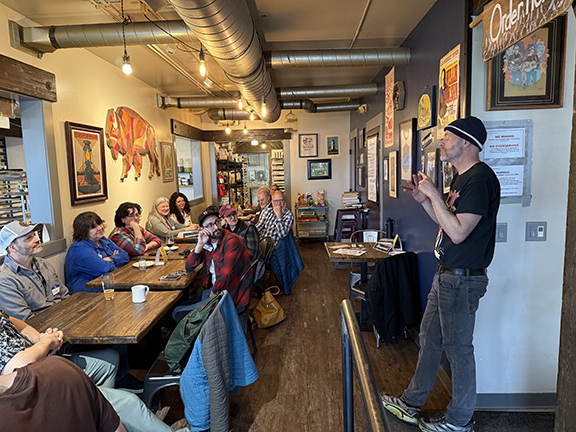
Learning and networking – The Community Foundation has taken local delegations to the last five national PolicyLinkSummits, which focus on creating opportunities for all. This year, thanks to multiple local delegations, Whatcom County showed its strength with more than 50 attendees eager to learn together and put that knowledge to work back home.
Backing a “whole community” lens – in this case for the Community Economic Development Strategy update and the Community Health Assessment and Improvement Plan to inform and reference one another. Everything is connected. While we need focused community plans for different elements of community wellbeing and prosperity, they need to talk to one another or we’ll miss the mark: a community where everyone thrives.
Convening an Inclusive Economy Summit Lab – slated for 2027. We’re gathering people thinking about and doing this work locally, regionally and nationally, including trailblazers and researchers to explore, highlight and then apply the brightest ideas in the business to the place we all share and love.
Measuring what matters – developing success metrics like savings rates, food bank demand decline, quality job creation, conversion/creation of employee-owned enterprises, child savings accounts for Whatcom County children at birth and more.
How you can help:
Visit WACEO’s website to see Whatcom County’s employee-owned businesses; better yet, book some time to talk with them!
Help give more Whatcom County kids a great start by giving to child savings accounts.
Align your commitment to local prosperity with the allocation of capital to address community priorities through impact investing.
Learn more about Millworks Phase 2 and the ways you can support this model project.
Resources for a Deeper Dive:
The Aspen Institute (Inclusive Economy definition)
Investing in Minority Entrepreneurs: an economic imperative for the US
Thrive: Birth To Bright Futures
United for ALICE – WA state (2026 report)
Washington Economic Justice Alliance – 10 year plan
Federal Reserve Survey of Consumer Finances (2023)
States of Affordability (Brookings Institute 2026)
WCF emailed this THRIVE on 10/29/2026. View it online HERE>
No Comments