



2026 THRIVE | Flood Response & Recovery in Whatcom County
Happy 2026 neighbors,
Like many of you, we’ve hit the ground running this year.
Once again: disastrous flooding. And once again: an incredible show of generosity, cooperation and neighborliness in the wake of it. Close to $1.4M
raised and much of it put to work immediately on neighbors’ most urgent needs. So heartening!
And so hard not to ask, what can we do today, this month, this year, to make sure that next time, we can report that our collective efforts to increase Whatcom County’s resilience have paid off? There are lots of good ideas in discussion.
Now’s the time to act,

Mauri Ingram,
President & CEO
COMMUNITY CHALLENGE
Water & Wind
December 2025 brought devastating flooding again to Whatcom County, just four years after the last “100-year” flood and driving the point home: severe flood risk is not going away. This time, high winds caused downed trees and power outages, hampering response efforts and adding hardship for all involved.
Some encouraging news:
- The response on the ground was much faster thanks to improvements made by many public agencies and nonprofit organizations.
- The existence of the Whatcom Long-Term Recovery Group (LTRG, aka Whatcom Strong), was established after the flood in late 2021 to coordinate disaster relief, recovery and rebuilding efforts. The LTRG model works, making it easier to leverage resources and expertise, including with national nonprofits, which deployed rapidly over the course of recovery, which in many cases can take weeks or months.
- Many more area nonprofits helped flood-affected households than were able to respond to the 2021 flooding. Multiple organization collaborating and communicating helps the whole disaster relief and recovery process work better for flood survivors.
- Thanks to you and other caring neighbors, nearly $1.4M has been raised with much of it already distributed to local agencies that are helping people meet urgent and emerging needs.
- The intricacies of the Nooksack River’s dynamic nature has been studied over the last several years and mitigation ideas developed: some measures are being implemented, for example, levee improvement projects in Ferndale and Cougar Creek.
- Many more viable responses are on the table. There is no single answer; all are needed, from property buyouts and elevations to floodplain restoration, levee reinforcements and new infrastructure such as ring dikes, to name a few.
Less encouraging:
- Many people were hit for (at least) the second time and some had still not recovered from the losses and damage of four years ago, including some still waiting for buyout or elevation funds.
- Our community should expect more major weather events in the years to come, with the biggest threat coming from more severe and more frequent flooding, sometimes complicated by high winds.
- Although flooding is a major threat, we can’t look away from earthquakes (“the big one” or otherwise) as well as drought and wildfires.
- Federal and state funding is unpredictable, slow and often complicated.
- Long-term infrastructure solutions are costly and can take years to come online.
WHAT WE’RE DOING:
- Making grants – getting money to people and businesses through local partners with the expertise and access to address vital needs. Flood response fundraising happens in a matter of weeks, while recovery is measured in years with a variety of needs. More donor dollars will be dispersed as needs become clear, which depends in part to pending federal aid.
- Advocating to evaluate resilience bonds to pay for mitigation infrastructure. This approach bypasses the three to five-year financing cycle with the Army Corps of Engineers and allows big infrastructure projects to break ground faster. Once built, money saved on relief and recovery can be diverted to paying off bonds, while shoring up the state’s tax base, thanks to minimizing damage, displacement and loss, business closures etc. Given the data that exists from the 2021 floods, our community is well positioned to evaluate and potentially pilot this approach.
- Encouraging local and state agencies to put interlocal agreement infrastructure in place to clarify roles and resources before a disaster occurs.
- Connecting with nonprofit and government partners at state, local, and federal levels to highlight needs and promote a resilience bond pilot as a promising tool for swift mitigation strategy implementation.
- Championing contract reform to make it easier for nonprofits to access resources necessary to help with disaster response, relief and recovery.
- Getting to know more of our neighbors across the county through a variety of venues and activities, because the stronger the network of personal, professional and institutional relationships, the better the response to disasters of any kind.
HOW YOU CAN HELP
- Recognize that those affected, whether homeowners, business owners, first responders, public and private sector workers, case workers and volunteers are doing demanding physical, mental and emotional work that continues long beyond the bad weather. Compassion, care, kindness, and empathy go a long way.
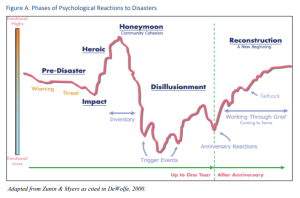
- Give to the Resilience Fund, Small Business Recovery Fund, Whatcom Food & Farm Fund, Whatcom Long Term Recovery Group and/or other nonprofits working on flood recovery.
- Know your neighbors and take other steps to prepare for a disaster.
- Volunteer with the Whatcom LTRG.
DEEPER DIVE:
Nooksack River Flooding Integrated Planning (FLIP)
Whatcom County River and Flood
The Long Term Recovery Group (LTRG) model
Whatcom County Division of Emergency Management (DEM) Emergency
Learn more about Resilience Bonds here and dive even deeper here
Mental Health Post Disaster
How Social Resources Influence Disaster Recovery Outcomes
Whatcom County Council: November 2021 Flood Briefing
WCF emailed this THRIVE on 02/02/2026. View it online HERE>
Subscribe to future Thrive newsletters HERE
No Comments